
The Van Baalen family history begins in Amsterdam, in the heart of the city’s old Jewish quarter, where generations of the family lived and worked before emigrating to America in 1857.
Where the name comes from
For most of the 1700s, Amsterdam’s Ashkenazi Jews didn’t use fixed family surnames. A man was known by his own name plus his father’s, so Israel Emanuel was Israel, son of Emanuel, and his son Hartog Israel was Hartog, son of Israel. The same few names (Israel, Emanuel, Hartog) came around again every generation.
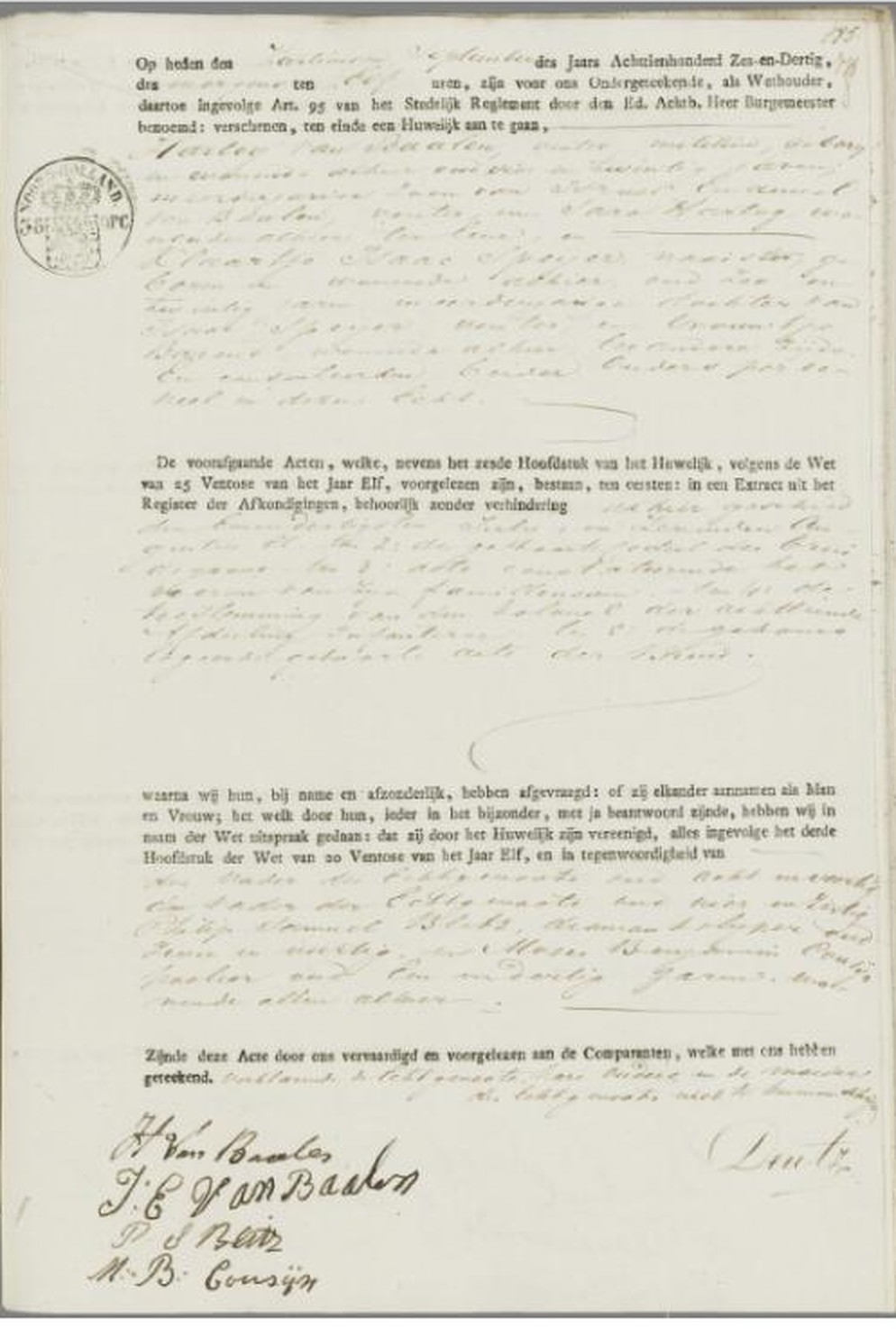
That changed in 1811, when the Netherlands was under Napoleon’s control and every family was required to register a permanent surname. That window is most likely when van Baalen became our official family name, though we haven’t yet found the family’s own registration. Some relatives picked up different surnames in the same process: Henry’s mother, Sara Hartog, appears in later records as Sara Schrijver.
Where “van Baalen” itself came from, we don’t know yet.
Amsterdam, 1755 to 1857
Our earliest confirmed ancestor is Emanuel Joseph van Baalen, born in Amsterdam in 1755. His son, Israel Emanuel van Baalen, was born around 1788 and made his living as a merchant and peddler. Israel married Sara Hartog, and around 1811 they had a son named Hartog. In America he would become Henry.
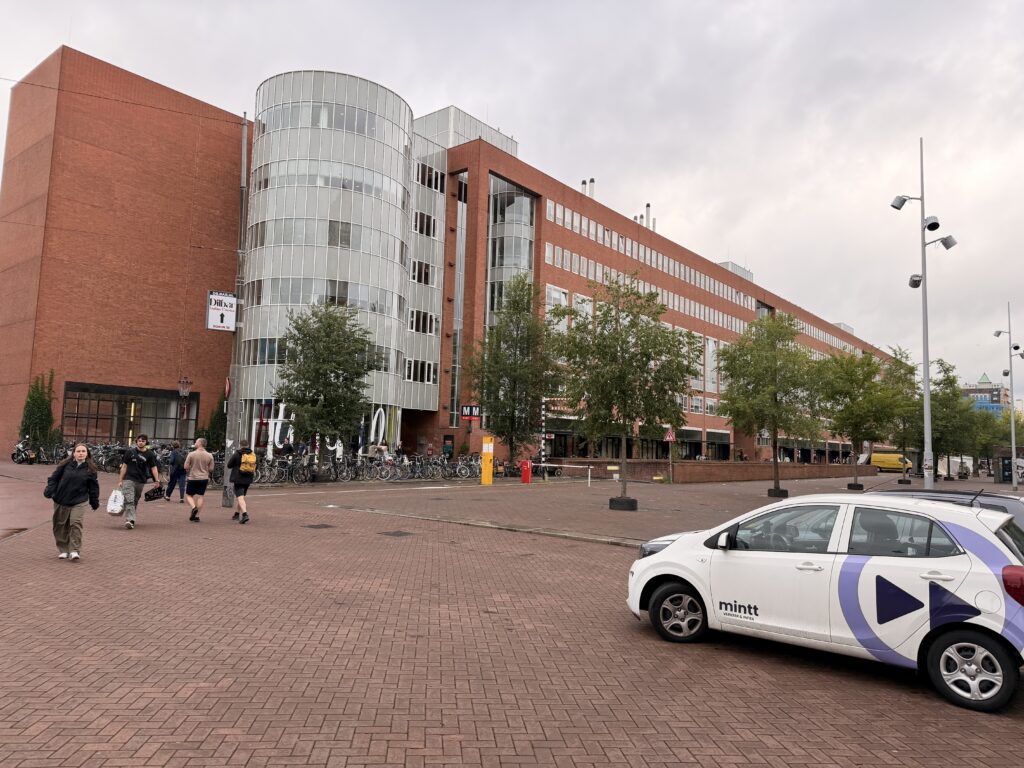
Hartog grew up in the crowded streets around the Houtgracht, near today’s Waterlooplein. At 18 he was registered for the Dutch militia, which recorded him as a merchant living on the Sint Antoniesbreestraat and standing about 5’4″. In 1836 he married Klaartje Speijer, a seamstress and the daughter of a street vendor. By the 1850s he was a shopkeeper, and the couple were raising a large family at Houtgracht 149.
Israel Emanuel died in 1849 in Noordwijk, on the coast. He never saw what came next.
The William & Jane, 1857
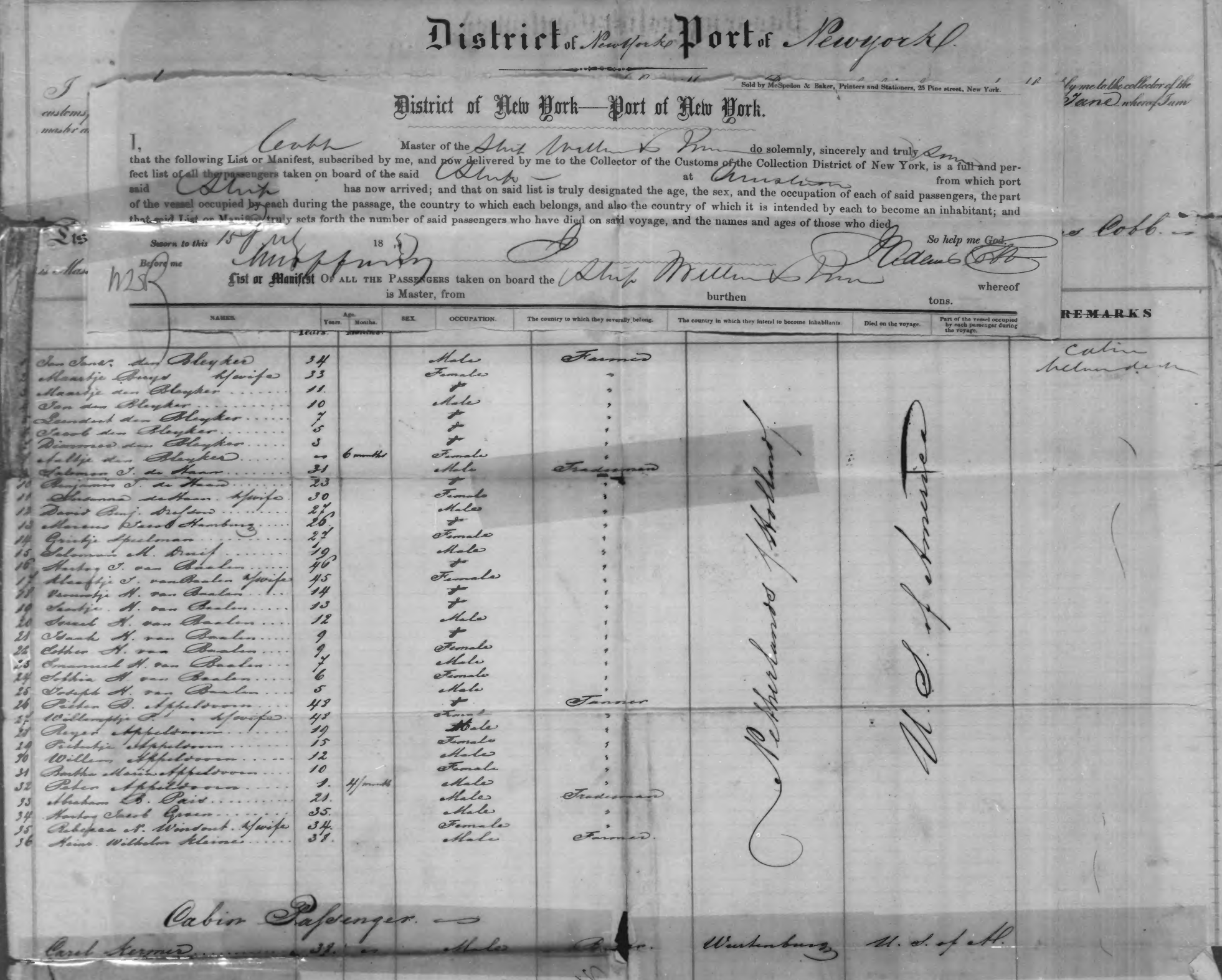
On 13 May 1857, the Amsterdam population register noted that the family at Houtgracht 149 had left for “Noord Amerika.” Nine weeks later, on 15 July 1857, the sailing ship William and Jane arrived in New York from Amsterdam under Captain Cobb. On board were Hartog van Baalen, 46, his wife Klaartje, and their children Saartje, Israel, Isaak, Elsje, Emanuel, Sophia, and Joseph
Cleveland and Detroit, 1860 to 1870
By 1860 the family had settled in Cleveland. Hartog was now Henry, Klaartje was Clara, and Henry was working as a clothing merchant. A few years later they moved to Detroit, and city directories track Henry’s clothing business from Michigan Avenue to Jefferson Avenue and back again.
Henry’s son Israel married Malinda Rosenstock, the daughter of German immigrants who had lived in Maryland before settling in Niles, Michigan. They had a daughter, Clara, in 1865 and a son, Phillip, on 21 December 1869.
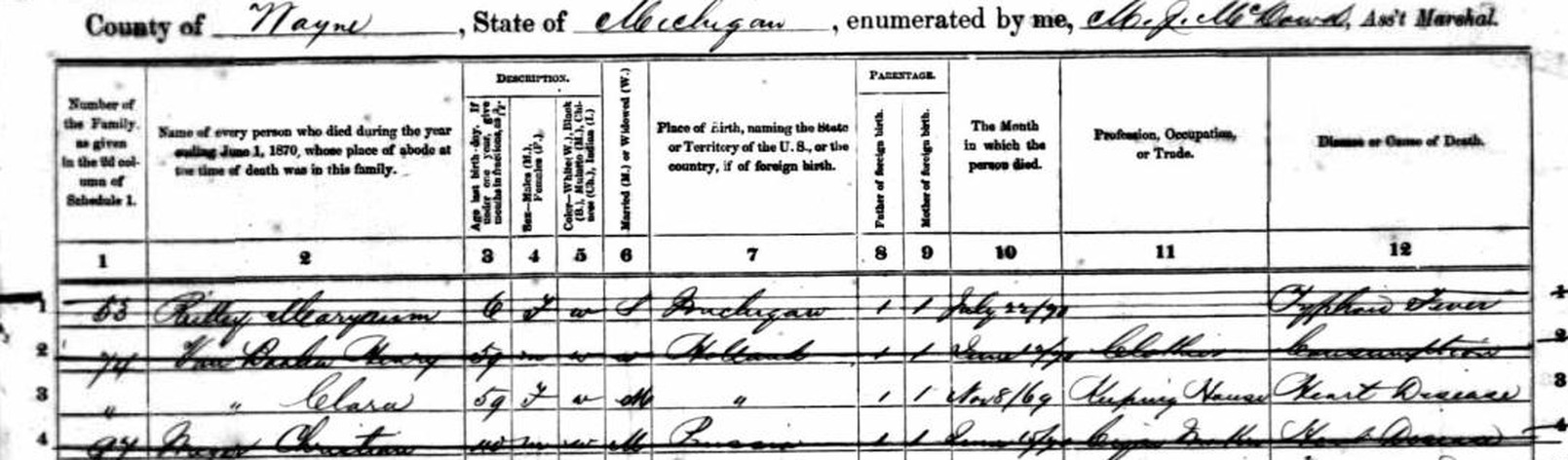
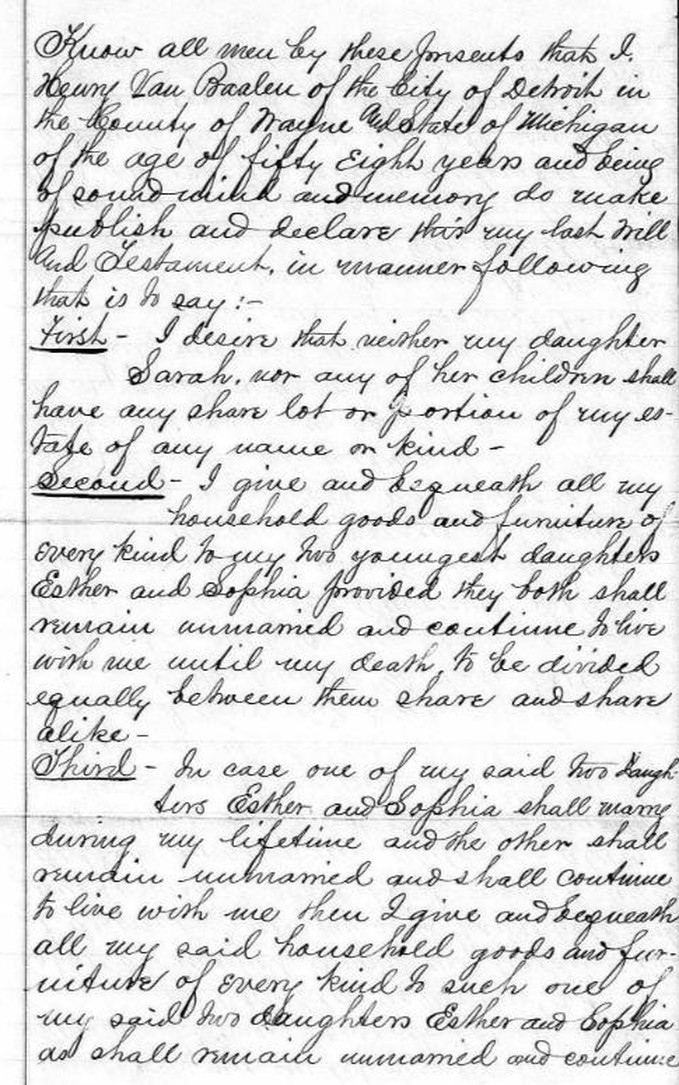
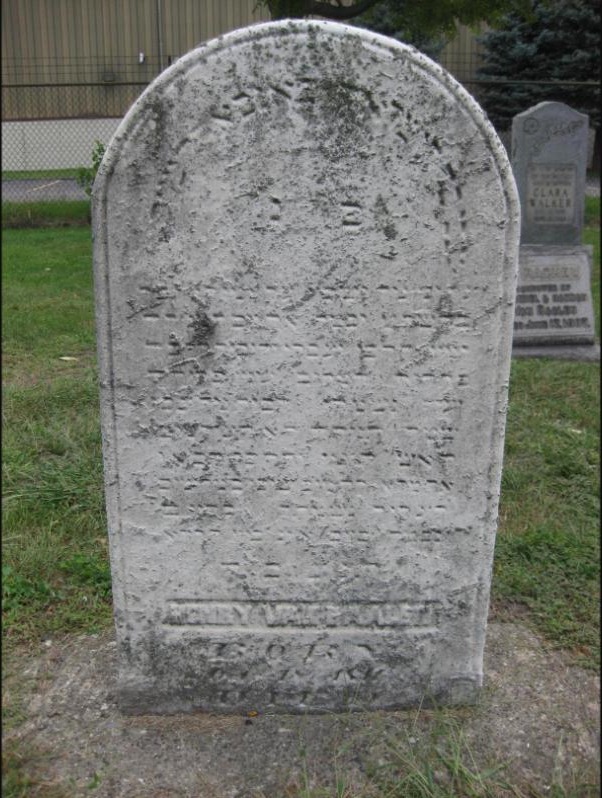
Then came a terrible stretch. Henry’s wife Clara died in November 1869. Israel died in January 1870, just weeks after Phillip was born, at age 27. Henry wrote his will in February, making sure his late son’s two small children would inherit their father’s share, and died that June.
Van Baalen Family History: From Amsterdam to Michigan Avenue
When Hartog van Baalen stepped off the sailing vessel William and Jane in New York harbor in July 1857, he brought with him a trade he had practiced for decades on the streets of Amsterdam: buying and selling. He was 46 years old, traveling with his wife Klaartje and eight children ranging in age from roughly five to fifteen. Within three years, his name was on a storefront on one of Detroit’s busiest commercial streets — and it would stay there for nearly four decades.
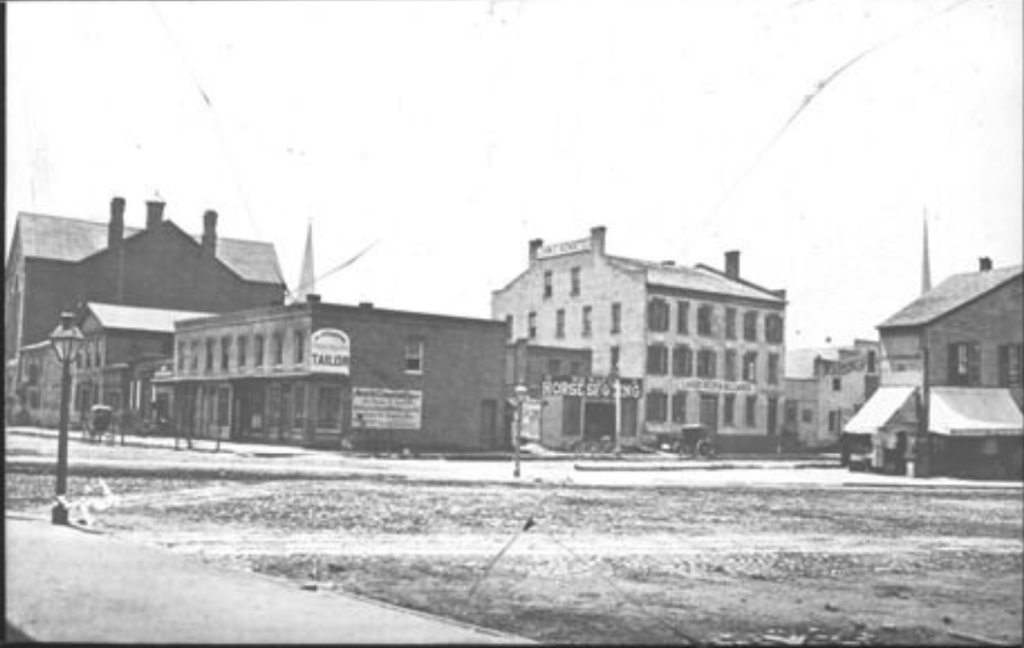
The family had come from the Houtgracht, a canal street in Amsterdam’s old Jewish quarter, where Hartog — known in America as Henry — had kept a shop and raised his family. In Amsterdam, the trade was listed in civic records as winkelier: shopkeeper. In Detroit, the city directories called him a clothier. The business opened in 1860, three years after arrival, at an address on Michigan Avenue. By 1863 Henry appears in the directory at 19 Michigan Avenue. His son Israel H. — born in Amsterdam in 1842, the eldest son who made the voyage at age fourteen — was already working the same block.
A Detroit city council petition from January 1861 places Israel H. at No. 10 Michigan Avenue, asking for permission to repair the building he occupied there. Father and son were building a business together on the same street, almost certainly side by side.
Henry moved addresses over the years — 19 Michigan Ave in 1863, 41 Jefferson Ave in 1868, back to 21 and 23 Michigan Ave by 1870 — but never left the corridor. The 1870 city directory still lists him as active. He died of consumption on June 12, 1870, at the age of 58, six months after Israel H. had died of his own illness in January. Two generations of the Van Baalen family in Detroit were gone within half a year of each other.
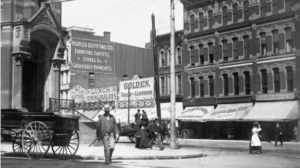
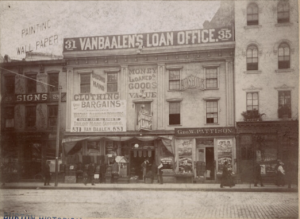
What happened next is one of the more striking details the historical record has preserved. The Van Baalen name did not leave Michigan Avenue with Henry’s death. His surviving sons — the 1870 probate file names William, Isaac, Emanuel, Abraham, and Joseph — kept the business going, and kept the name on the sign. The trade shifted from clothing to lending: Van Baalen’s Loan Office became a fixture on Michigan Avenue, the kind of pawnbroker and loan operation that served working Detroit in the Gilded Age.
The storefront signage, visible in a photograph taken at Michigan Avenue and Lafayette, still read “Established 1860” — connecting the loan office directly back to Henry’s original clothier trade.
The business was prominent enough to appear in multiple street photographs taken by Detroit’s leading photographers across two decades. The Detroit Public Library’s Burton Historical Collection holds images of Van Baalen’s Loan Office at the Eagle Block on Michigan Avenue, next to Gorman’s hats with C.J. Whitney’s Music House in the background; next to Sanders Pavilion, the famous Detroit ice cream parlor; and at a second location on Griswold Street near Detroit High School.
In 1895, photographer Ira J. Goodrich captured the loan office on Michigan Avenue between Griswold and Shelby, in the former freight buildings of the Michigan Central Railroad depot.
A photograph dated October 21, 1897 shows the loan office still operating, now next door to the Dime Savings Bank. Thirty-seven years after the family opened a clothing shop on Michigan Avenue — thirty-seven years after Henry van Baalen, late of Houtgracht 149, Amsterdam, set up a storefront in a new city in a new country — the Van Baalen name was still on the street.
Indiana, 1870s to 1960s
Malinda raised her children as a young widow and eventually moved to Indiana. She died in 1902 and is buried in Rodef Sholem Cemetery in Wabash, which became the resting place for many of the Van Baalens who came after her.
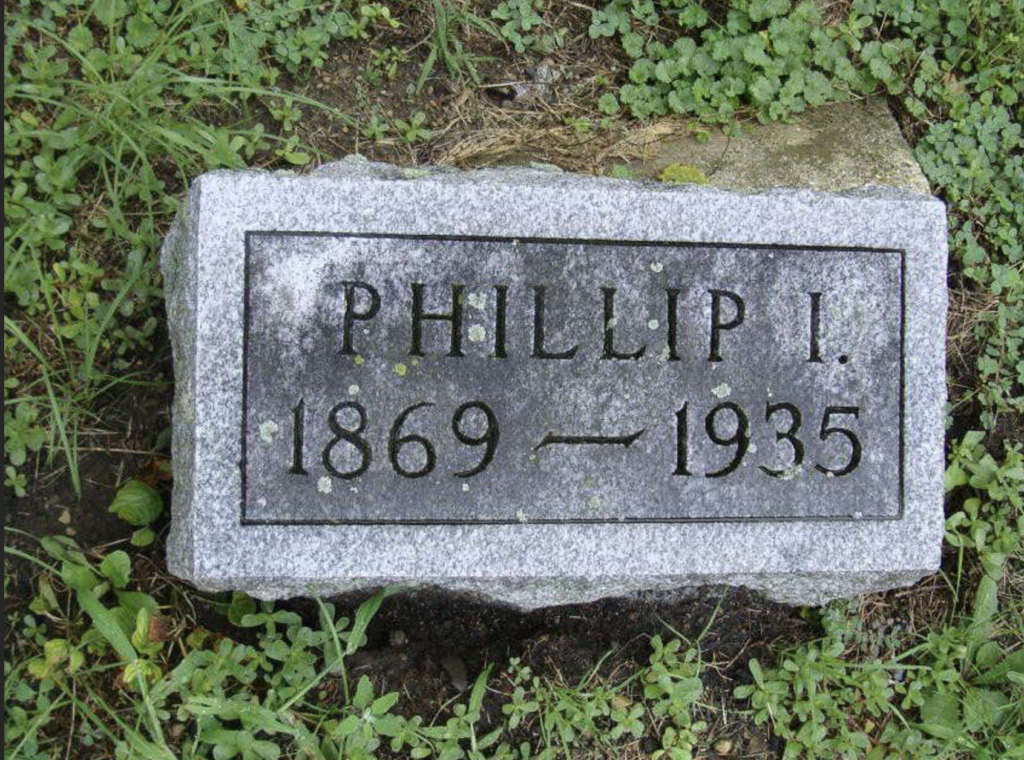
Her son Phillip Israel van Baalen went into retail. Around 1897 he partnered in the Economy Store on Jefferson Street in Huntington, and in 1902 he bought out his partner and renamed it Phil Van Baalen & Co. He married Rozella Eppstein, a rabbi’s daughter from Easton, Pennsylvania. Phillip died in Peru, Indiana, in 1935, and Rozella in 1953. Both are buried at Rodef Sholem in Wabash.

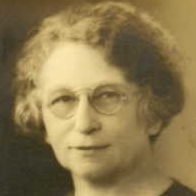
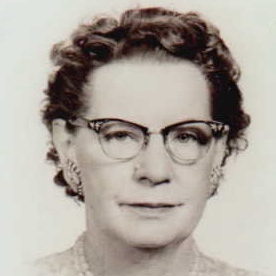
Their son Dewald Louis van Baalen was born in Huntington in 1903 and followed his father into retail as a shoe store manager. He married Daisy Reeser of Logansport in 1922, and they had two sons, Richard and Phillip. Dewald later settled in Columbus, Ohio, where he died in 1966. Daisy spent her working life in Logansport, retiring as a clerk from the Schiff Shoe Store, and died in 1987.
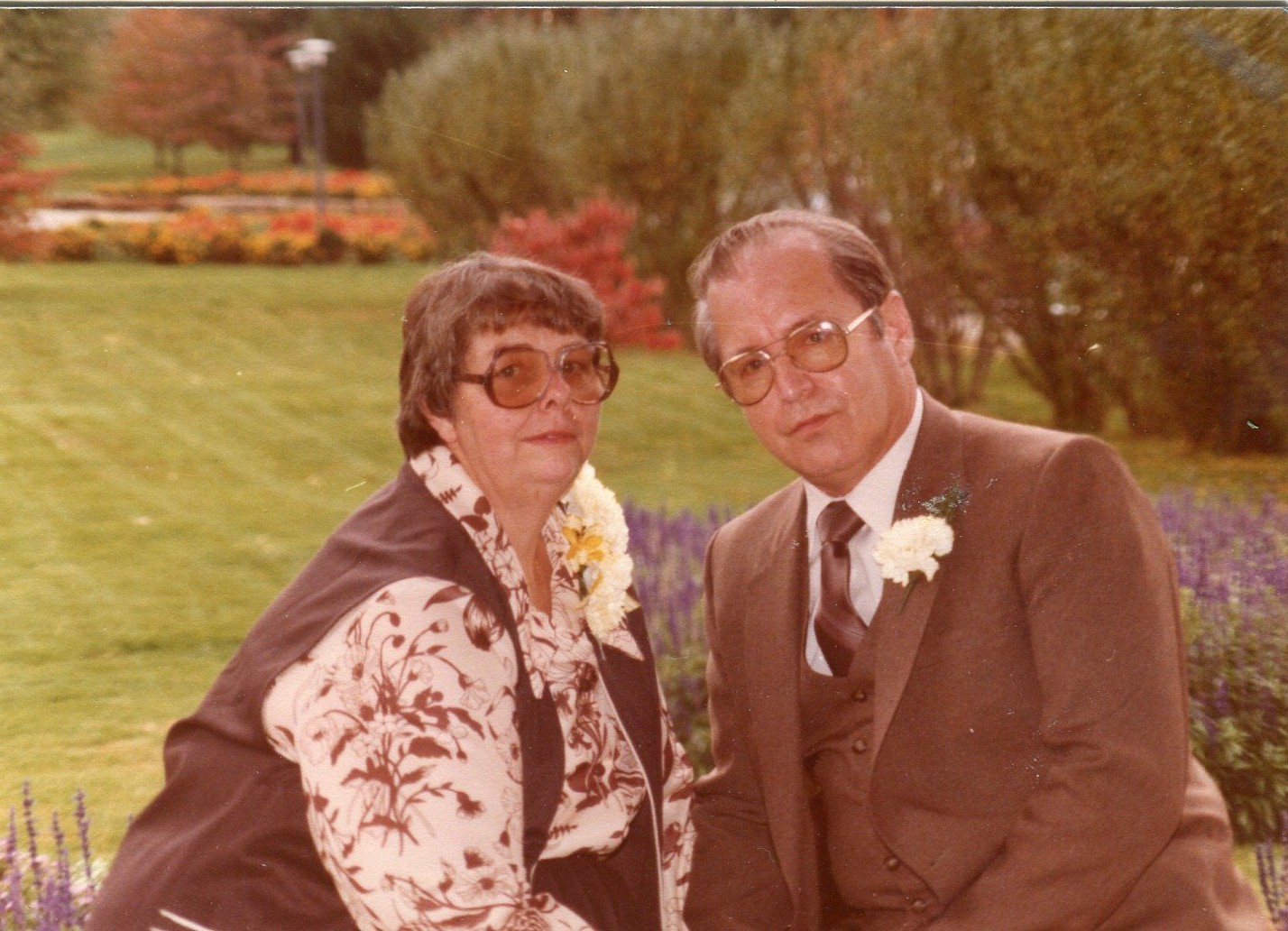
Richard and Emily
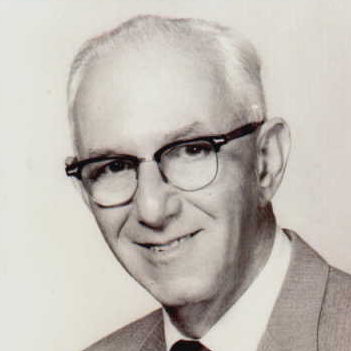
Richard van Baalen was born in Logansport in 1932. Retail ran in the family, and he spent many years at Schiff’s Shoes, where for a time his boss was his own father, Dewald. He went on to a long career with General Motors, retiring from the auto industry, but never fully left retail behind: while working at GM, he also ran a small store of his own.
He married Emily Rose Reynolds, also a Logansport native, born in 1934. Emily worked as a clerk for a number of companies while raising four children. Emily died in 1996 and Richard in 2012.
And that brings the story to us, still here and still finding new pieces of it.
For fellow Van Baalen researchers
A few things we’ve learned that might save you some time:
- Spellings drift. Look for Van Baalen, van Baale, VanBaalen, Vanbalen, and Balen. The 1860 census spells it Vanbalen.
- Names changed at the dock. Hartog became Henry, Klaartje became Clara. Dutch records will use the original names.
- Middle initials are clues. On the 1857 manifest, every child carries the father’s initial “H.” for Hartog. Later, Phillip Israel van Baalen was named for his father, Israel.
- Malinda Rosenstock goes by many names. Census takers recorded her as Belinda, Marinda, Malinda, and Matilda.
- Wabash is the place to look. Rodef Sholem Cemetery in Wabash, Indiana, holds several generations of the family.
- Detroit’s Temple Beth El keeps a Van Baalen family file in its Leo M. Franklin Archives, and the family’s early Detroit burials are at Beth El Cemetery.
Help us go further back
Our trail currently ends with Emanuel Joseph van Baalen, born in Amsterdam in 1755. We don’t yet know who his parents were, or who Sara Hartog’s parents were. We believe Emanuel Joseph’s wife was a woman named Roosje Isaac, who died in Amsterdam in 1832, but we haven’t been able to prove it.
The Van Baalen family history documented here draws on primary records held at archives in Amsterdam, Detroit, and across Indiana — city directories, probate files, census records, and photographs preserved by the Detroit Public Library’s Burton Historical Collection. This Van Baalen family history page will continue to grow as new records surface. If you’re researching your own Van Baalen family history and believe your line connects to this one, feel free to reach out. You can email us at pete@vanbaalen.us.